In this post we’ll derive the form of a linear equation between two points by simply knowing one thing:
Given 

The inspiration of this post is deriving the derivative.
So, let’s get started. We want to find an equation of a line that passes through 
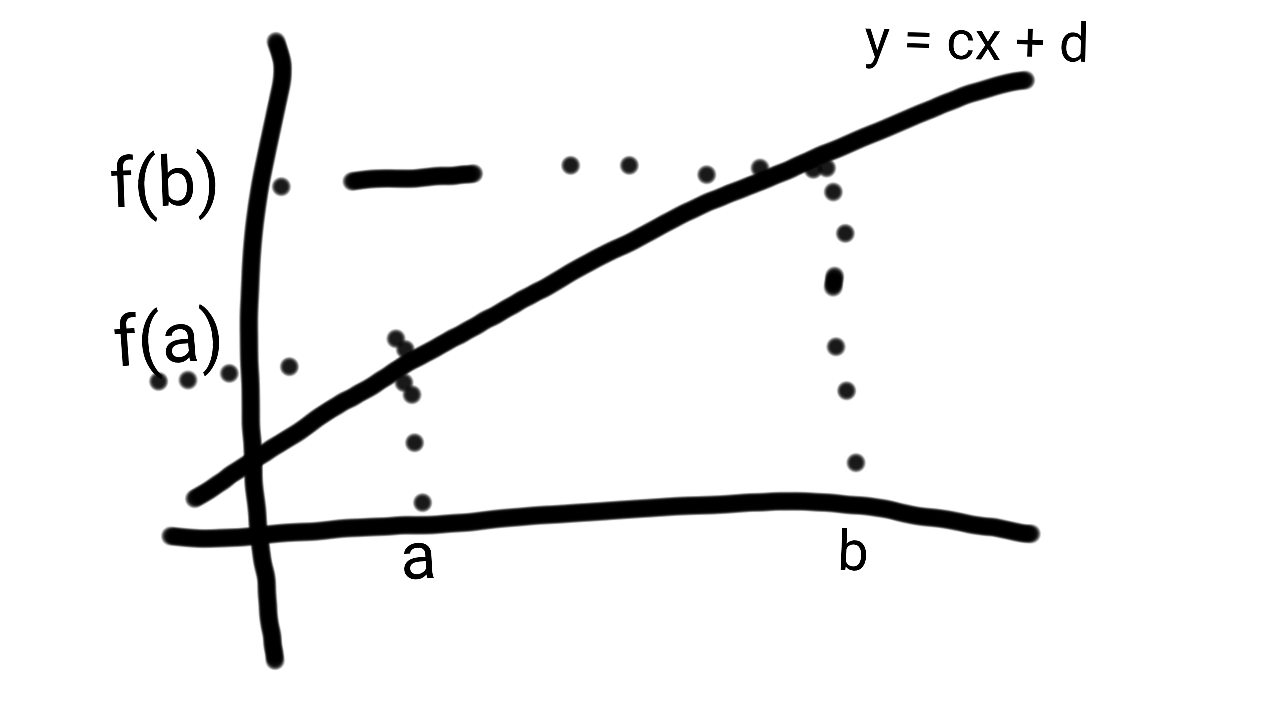
So we plug the points into the equation of a line to obtain the system:

Solving for m, d:

To eventually conclude 
In some of the next posts, we will derive the formula of a derivative of a function.

 bor0's reflective blog
2 thoughts on “Deriving point-slope from slope-intercept form”